How Ecommerce Brands Use Automation to Cut Fulfillment Errors in Half
How Ecommerce Brands Use Automation to Cut Fulfillment Errors in Half
Here's a small question that can ruin a founder's week: how many of your orders went out wrong last month?
Most store owners pause at that one. They know the refunds. They know the angry emails. But the actual number? Rarely. And that gap, between what's happening and what we think is happening, is where a lot of ecommerce profit quietly disappears.
Let's start with a simple story. A shopper in Chicago orders a medium black hoodie on a Friday night. Tuesday, the parcel arrives. Inside is a large grey one. She's annoyed, she leaves a one-star review, and your support team burns half a day on return labels and apologies. One wrong item. Maybe $60 of real damage once you count shipping both ways, handling and a customer who may never come back.
Now imagine that happening a few hundred times a month. Suddenly it's not a "small mistake" anymore. It's a line item.
So what are the smart brands doing about it? That's what we're digging into. Stick around for the part about packing stations, because it's the one most people skip, and it's honestly the cheapest fix on the list.
The Real Cost of a Wrong Order (It's Not Just the Refund)
When we think of order fulfillment errors, we picture a refund. But follow the money and you'll see a longer trail:
● Outbound shipping you paid for, and return shipping on top
● A product that's now sitting in a returns pile (or lost in it)
● Support hours spent on one angry email thread
● A customer who quietly switches to your competitor
Shoppers in the US, UK and Australia have very little patience for this. If a store in London sends the wrong dress, the buyer doesn't wait around for a fix. They open another tab. That's why shipping accuracy has become a brand issue, not just a warehouse issue.
And here's the funny part. Most of these mistakes don't come from careless people. They come from broken processes: handwritten pick lists, orders copied between spreadsheets, shelves where twosimilar products sit side by side. Put a tired person in that setup at 4 pm and mistakes are almost guaranteed.
Fix #1: Stop Copying Orders by Hand
The first thing growing brands do is connect their sales channels to one order management system (OMS). Shopify, Amazon, WooCommerce, eBay, whatever you sell on, every order lands in one place automatically.
Sounds basic, right? But think about what it removes. No more retyping addresses. No more typing "SKU-4471" when it was "SKU-4417". No more "oops, we sold that item on two channels at once."
Picture a skincare brand in Toronto selling through its own site and Amazon.ca. Before automation, a bestselling serum can sell out on one channel while the other keeps accepting orders. With a connected system, stock updates everywhere within seconds. The overselling emails stop, and so do the apology discount codes.
Fix #2: Give Your Warehouse an Address System
Ask yourself: if a new hire started tomorrow, could they find your top-selling product in under a minute?
A warehouse management system (WMS) makes that possible. Every product gets a specific home, say Aisle 4, Shelf B, Bin 12, and the system tells the picker exactly where to go and what to grab. It also plans the walking route, so people aren't zig-zagging around the building all day.
You've probably heard of the extreme versions. Amazon uses robots to bring shelves to workers in its US centers, and Ocado in the UK runs grocery warehouses where robots move crates across a grid. Cool stuff. But here's the thing: you don't need robots. A small brand in Melbourne can get most of the benefit from a basic WMS and a few handheld scanners. The magic isn't the machinery. It's the structure.
Fix #3: Scan Everything (Seriously, Everything)
If I could pick only one upgrade for a struggling store, this would be it.
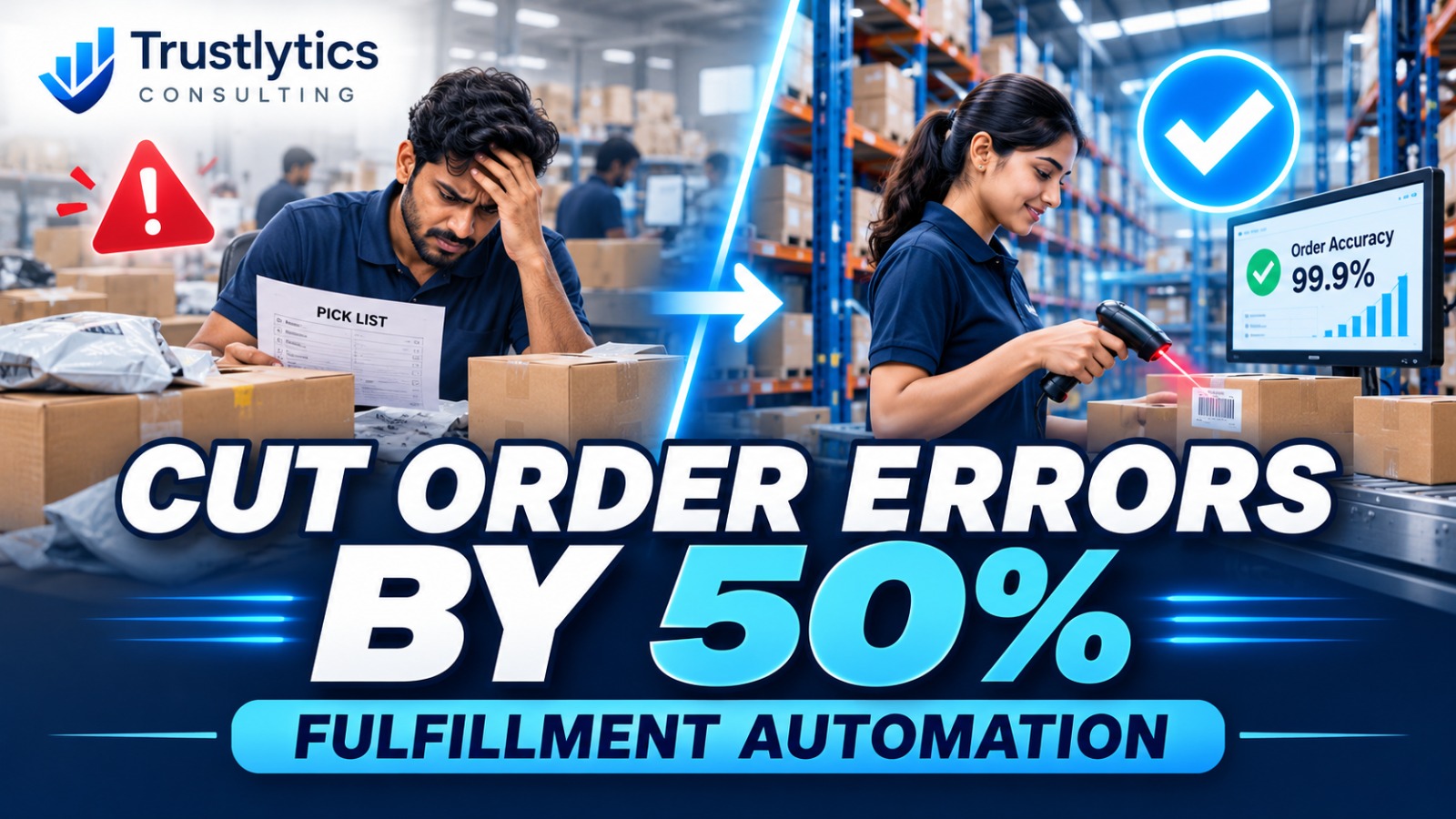
Barcode scanning at three moments: when stock arrives, when an item is picked, and when it's packed. That's it. If a picker grabs the wrong product, the scanner refuses to continue. The mistake gets caught in two seconds instead of two weeks.
Compare that with the old way, where a person reads a paper list and trusts their eyes. Brands that add scan verification to their pick and pack process commonly see wrong-item shipments fall sharply, often to a small fraction of what they had before. Exact results depend on your catalog and team, but the direction is almost always the same.
This matters even more for brands shipping across borders. A boutique in Lyon sending to customers in France, Germany and Belgium deals with different labels, languages and paperwork. Scanning keeps the physical box and the documents telling the same story.
Fix #4: Make Your Stock Count Believable
Here's a secret: plenty of "fulfillment errors" are actually inventory errors wearing a disguise. Your system says 12 units. The shelf has 9. Three customers are about to be let down.
Good inventory management software fixes this through live updates after every sale, return and restock, plus low-stock alerts so you reorder before panic sets in. Many teams also move to cycle counting, where a small section of the warehouse is checked every week instead of one exhausting yearly stocktake.
Think of an Australian homeware brand heading into the Black Friday and Christmas rush. Without accurate numbers, peak season turns into a pile of cancelled orders. With them, the team spots which products will sell out days early and acts in time. That's the difference between a record month and a stressful one.
Fix #5: Catch Bad Addresses Before They Ship
"Londn." "Apt 4B" missing. A postcode with one digit off. Tiny typos, big headaches.
Address validation at checkout flags these while the customer is still on the page. Then shipping software takes over: it picks the carrier, sets the service level based on weight and destination, and prints the label. Whether you use USPS, UPS or FedEx in the States, Canada Post, Royal Mail, Colissimo or Australia Post, the idea stays the same. Let software handle the routine, let people handle the exceptions. It also helps you dodge those annoying carrier surcharges for wrong dimensions or bad addresses.
Fix #6: The Packing Station Trick Nobody Talks About
Remember that teaser? Here it is.
The packing station is your last chance to catch a mistake, and a basic weight check is surprisingly powerful. If the order should weigh 1.2 kg and the scale shows 0.8 kg, something's missing. The system stops the box before it leaves the building.
Some brands add photo capture or scan verification here too, and smart box suggestions so fragile items always get the right padding. Fewer damaged parcels, fewer refunds, and more customers posting happy unboxing photos instead of angry reviews.
Fix #7: Don't Let Returns Become a Black Hole
Returns aren't errors by themselves, but a messy returns process creates new ones. An item comes back, sits in a corner, never gets restocked, and your system thinks it's gone forever.
An automated returns portal gives customers a simple way to start a return, creates the label, and scans the item back into inventory with its condition noted. This is huge in the UK and EU, where fashion return rates are naturally high. It also hands you free insight. If one jacket keeps coming back as "too small," your problem is the size guide, not the warehouse.
Fix #8: Read Your Own Data
This is where automation stops being a speed upgrade and starts being a learning tool. Every scan and order leaves a trail. Check it weekly and ask:
● Which SKUs get picked wrong most often?
● Which warehouse zone or shift has the most slips?
● Which carrier causes the most delays or damage?
Which products come back the most, and why?
● Errors are rarely random. Often it's two lookalike products on neighboring shelves, or one confusing label. Once you see the pattern, the fix is cheap. That's how brands go from "fewer mistakes" to a measurable cut of 50% or more.
In-House or 3PL?
Smaller brands often wonder whether to build their own setup or hand it to a 3PL. Outsourcing can work really well, especially if you want a US warehouse for American customers and a European hub for France and Germany.
Just don't assume outsourcing means "not my problem." Ask the partner straight: Do you scan at every step? Does your inventory sync with my store in real time? What order accuracy rate do you guarantee? A good partner answers quickly and with numbers.
Four Mistakes That Waste Your Money
1. Automating a messy process. If your shelves and SKUs are chaos, fix that first. Software just makes chaos faster.
2. Buying too much, too soon. Start with scanning and inventory sync. Robots can wait.
3. Skipping team training. If your staff doesn't trust the system, they'll work around it.
4. Not measuring a baseline. Know your error rate today, or you can't prove progress tomorrow.
Where Trustlytics Consulting Fits In
By now you might be thinking, "Great, but where do I even start?" That's a fair question, and it's the one that stalls most ecommerce owners. There are dozens of WMS platforms, OMS tools and shipping apps, and every vendor swears theirs is the best.
This is where Trustlytics Consulting helps. The team looks at how orders actually move through your business, finds the exact points where errors sneak in, and builds an automation roadmap that matches your budget and order volume. No pushing one expensive tool. Just data-backed choices on what to automate first, what can wait, and how to track results. If you sell to customers in the US, Canada, the UK, France or Australia and want fewer mistakes with happier buyers, talking to Trustlytics Consulting is a smart first move.
Frequently Asked Questions
Need help improving your Business Automation & growing your business?
Cutting fulfillment errors in half isn't about fancy robots. It's about removing the small manual steps where mistakes hide: retyping orders, guessing shelf locations, trusting stale stock counts, skipping the final check. Connect your systems, scan everything, keep inventory live, validate addresses, and look at your numbers every week.
Do that, and something nice happens. Refunds shrink, reviews improve, and customers start placing that second order. In a crowded market, getting the right product to the right door the first time is oneof the strongest edges you can build.
So, back to that opening question. How many of your orders went out wrong last month? If you can't answer it yet, that's your first step.